Liquor License 101 for Restaurants and Bars

If you’re starting up your own restaurant, bar, brewery, or event space and you plan on serving alcohol, you’re going to need a liquor license. It doesn’t matter the state where your business will be located: it’s always illegal to serve alcohol without a proper license. 

But getting a liquor license can be difficult and time-consuming. And once you have one, you can lose it if you violate state guidelines, whether it’s over-serving your customers, serving minors, selling alcohol during restricted time frames, or disorderly conduct in your establishment. And now with Covid-19 in the picture, state liquor authorities are temporarily revoking liquor licenses from restaurants and bars violating mandated health and safety protocols related to the pandemic.

Here’s everything you need to know about getting a liquor license in 2020: what it is, how much it costs, and what to expect from the process. 

What is a liquor license?

A liquor license makes it legal for your establishment to sell alcohol. Liquor licenses are issued by the state in which your business operates, as different states have different regulations relating to alcohol sales. Requiring restaurants and bars to obtain a liquor license makes it possible for the state and municipal government to enforce their alcohol policies.

What kind of liquor license do I need?

The type of license you need depends on how you sell or serve alcohol. The two primary “categories” are on-license and off-license.

  • On-license: This is for businesses that are selling or serving alcohol to be consumed on-premises. (Also called on-premise or on-sale licenses.) This is the type of license that a restaurant or bar needs to obtain.
  • Off-license: Specifically for businesses selling alcohol to be consumed elsewhere. Liquor stores, wine shops, and grocery and convenience stores are all examples of businesses that sell alcohol for “carry-out,” requiring an off-license.

There are several types of on-licenses that restaurants and bars may need to apply for, depending on the type of alcohol you’re serving and the manner in which you’re serving it. A few common examples:

  • Restaurant liquor license: This is generally known as the “all liquor license” because it allows a business to serve all types of alcohol
  • Beer and wine liquor license: Unlike the “all liquor license,” a beer and wine liquor license doesn’t permit you to sell stronger spirits.
  • Tavern liquor license: This is commonly used for restaurants that serve both food and alcohol but have at least 50% of sales generated solely from liquor. 
  • Server license: Some jurisdictions require individual servers to apply for a server license in addition to a liquor license. Any staff serving alcohol of any kind must take a liquor class prior to getting this license, which educates them on the kinds of alcohol there is, the legal amounts in which to serve it according to the state, and DUI and DWI laws. 

How much does a liquor license cost?

How much a liquor license costs depends on the state you’re operating in and the type of license you’re applying for. The range can be anywhere from $50 to more than $300,000. The average, however, is around $1,400. 

Keep in mind that you might be expected to pay additional processing fees depending on your local regulations. Some states have Liquor License Quotas, which means that only a certain number of licenses can be in use at the same time, depending on the population of the area. If that’s the case, then a new liquor license can be more expensive due to limited supplies. 

How do I apply for a liquor license? 

Applying for and obtaining a liquor license is a bit of process. There are a number of steps you have to take (and hoops you have to jump through) not only to get your license, but to maintain it.

  • Know your state’s liquor laws 

Before you can apply for a liquor license, you have to know what you’re applying for. Remember, there are different licenses available depending on what kind of establishment you’re opening: a restaurant, a tavern or bar, or a liquor store. Also be sure to brush up on any additional requirements your city or county may have in place. You can consult your local Alcohol Beverage Control (ABC) board for this information, or you can check with your state’s alcohol or liquor agency.

  • Get all of your business permits

Before you apply for your liquor license, check to see what kinds of permits you’ll need for your application. Here again, your local ABC board can be a great resource. Check their website to see which ones you’ll need. (Once you have them, keep all of the paperwork secure and on-hand, as you’ll most likely have to present it.)

  • Apply with your local ABC board

Once you’re familiar with your local laws and know the type of license you’ll need, then it’s time to apply with ABC board in your area. You can do so in person, or in some cases, you may be able to apply online. 

  • Defend your proposal 

You might need to defend your case as to why you want to sell alcohol in a public hearing if a member of your local community protests your application. 

  • Renew your liquor license and permits

Applying for a liquor license isn’t just a one-time thing. Expect to renew your license and permits every one to three years. And keep in mind: if you’re found to be in violation of liquor laws, you could have your license suspended or revoked altogether. 

How long does it take to get a liquor license?

Like we said: getting your liquor license is a process. In some cases, expect to wait weeks or even months for your application to be processed and approved. The standard waiting time to hear back from your local ABC board is up to six months.  If you live in a state with quotas, it can take longer, as you’ll have to wait for another business to forfeit theirs (or you can try to buy one on the secondary market).

So if you know you want the option to sell or serve alcohol, our advice is apply for your license as soon as you can in your startup process.

Liquor licenses: worth the hassle?

Getting your liquor license requires a lot of patience and planning — and it can be a financial investment, too. Beyond obtaining the license itself, there are other costs that go into serving alcohol, like equipment, server training, building out a drink menu, etc.

For bars, obviously, getting a liquor license is a no-brainer; for other establishments, you’ve got to decide whether it’s worth the hassle on and cost on the front end as well as the effort to maintain it. Take into account your location, hours, menu, and customer base/demographic. For example, a family or kid-focused establishment may choose not to serve alcohol. The same goes for restaurants that operate only on weekdays, during regular business hours — like breakfast spots, or cafes and coffeehouses catering to working professionals.

But many customers expect alcohol as an option, especially if your restaurant operates on evenings and weekends, or if your menu lends itself to alcohol pairings. It’s also important to note that alcohol sales generally have higher margins than food sales, so financially speaking, a liquor license is often worth the up-front hassle. 

Bottom line: before pursuing a liquor license, be sure that serving alcohol in your establishment is actually going to benefit your business. If you decide to move forward, don’t be intimidated by the process. Simply do your research on the front-end: determine the licenses you need, learn about the regulations that apply, and understand the associated costs and timeline. 

(Need help staffing your bar? Read our tips for hiring a bar manager here!)

You might also be interested in

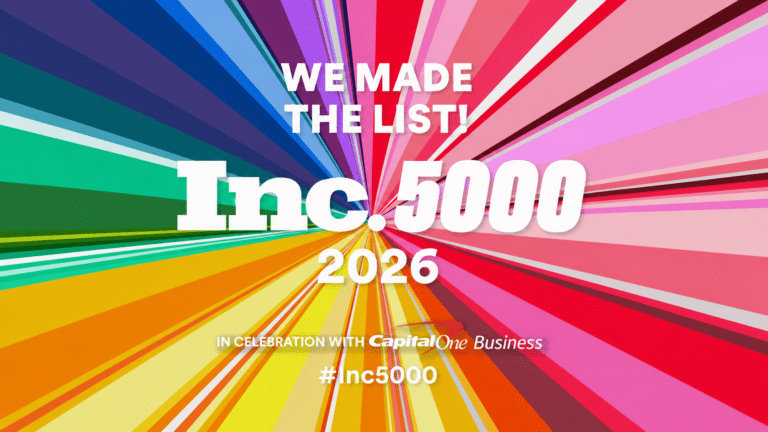
For the third year running, Kickfin has been named to the Inc. 5000 — Inc. magazine’s definitive ranking of the fastest-growing private companies in America — earning our place once again among the fastest-growing companies in restaurant and hospitality technology.

Three years on the Inc. 5000 isn’t a lucky streak. It’s a scoreboard — and it says the same thing every year: the industry is moving off cash, and it’s moving to Kickfin.

Restaurants and hospitality groups are walking away from cash tip-outs, spreadsheets, and pay cards — and they’re not looking back.

Growth that’s built on getting operators out of the cash business

Three straight years on this list is the result of one simple idea taking hold across the industry — but the metric we’re proudest of isn’t ours. It’s our customers’.

Operators are trading 3 a.m. bank runs, $10,000 in the safe, and 45 minutes of manual tip math per shift for something that takes seconds. Southern Proper Hospitality went from three to four bank runs a week to one a month. RA Ventures — 55+ locations across three brands — handed managers back the four hours a night they used to lose to counting cash and paperwork, and eliminated bank runs entirely. At one of its concepts, 98% of employees opted into instant payouts the moment they had the choice. That’s not a software win. That’s giving managers their nights back — and employees their money faster.

We hit this ranking through a stretch that tested every operator in the country: labor shortages, rising costs, and razor-thin margins. Kickfin grew because in that environment, cutting hours of admin and eliminating cash risk stopped being a nice-to-have and became survival.

Why operators keep choosing Kickfin

Three things separate us in a category we’ve defined:

Tips go straight to the bank account employees already have. No proprietary card. No transfer fees to touch their own money. No credit checks, no age restrictions, no financial product nobody asked for. Marco’s Pizza chose Kickfin specifically to avoid handing staff a pay card. Rock N’ Roll Sushi eliminated the $1.50-per-shift fee employees were paying just to access their own tips somewhere else.

Tip math is calculated straight from the POS. Toast, Square, Micros, Lightspeed, R365, Union, SkyTab — Kickfin reads the shift data and calculates pools and shares automatically. No exports, no whiteboards, no “trust me, I did the math.”

Every payout is on an auditable digital ledger. Complete history by location, shift, and employee. When it’s time to answer a compliance question, the answer is already there.

The bigger story: this was never just about tips

Here’s what the ranking really signals. What started as the best way to pay out tips has become the disbursement infrastructure the hospitality industry runs money through — POS-native, API-first, and built for 50-state payroll compliance from day one.

Payroll and HCM platforms have noticed. Companies like iSolved, Auris, Adora, Netchex, and AllianceHCM are embedding Kickfin’s API to deliver instant tip and wage disbursement to their own restaurant customers. We’re not a feature bolted onto someone else’s stack — increasingly, we are the stack.

And we’re not slowing down. Something big is coming in early 2027 — the next chapter in how Kickfin moves money for the hospitality industry. We’re not ready to show all of it yet, but if the last three years are any indication, it’s worth watching this space.

The Inc. 5000 measures how fast a company has grown. What it can’t capture is why: we’re building the rails for how the entire hospitality industry pays its people. The tip management category is ours to lead today — and it’s only the beginning of what Kickfin is building.

Thank you — you built this list

Every place on the Inc. 5000 is really thousands of shift-end tip-outs that went off without a hitch, thousands of bank runs that never happened, and thousands of employees who got paid instantly and fairly. That’s on our customers. We owe this ranking to the operators who trusted us with the least glamorous, highest-stakes 20 minutes of their night — and to the teams who show up for them beyond business hours, because restaurants don’t clock out at 5.

We’re honored to be on the 2026 Inc. 5000. We’re more excited about what we’re building next.

See why the fastest-growing restaurants are ditching cash tip-outs for good. Book a demo →

2025 was a defining year for Kickfin and the customers who rely on our software to automate their tip management processes

Driven by direct customer feedback and the evolving realities of restaurant operations, our Product Development team delivered a wave of meaningful enhancements across tip calculation, integrations, user controls, and accounting.

Before we look ahead to 2026, here’s a look back at the product advancements that made Kickfin more robust, more flexible, and more ready to meet the demands of restaurant teams than any other tipping solution.

Advanced Tip Calculator Enhancements

n 2025, we significantly expanded the functionality of Kickfin’s Tip Calculator. Here are a few standout features that we released:

Separate Tips and Auto-Gratuities

Kickfin now tracks tips and auto-gratuities separately, allowing operators to report them independently to payroll and manage them differently for tax purposes.

This distinction is especially important in light of the 2025 No Tax on Tips legislation. While tipped employees no longer pay federal income tax on the first $25,000 in tips earned annually, auto-gratuities, service fees, and other compulsory charges remain taxable.

Kickfin ensures those earnings are categorized correctly from the start — reducing downstream payroll and compliance risk.

House Accounts for Service Charges

Not all service charges are distributed 100% to employees — and Kickfin allows you to handle that with “House Accounts.”

Operators can retain a portion of service charges while distributing the remainder to the team. This is particularly valuable for:

  • Special events and private dining
  • Paying out job roles that don’t typically participate in tip pools (e.g., event managers)
  • Maintaining clarity and transparency around service charge allocation

More Flexible Tip Share Logic

No two restaurants share tips the same way — and Kickfin’s calculator now supports even more real-world scenarios.

Operators can configure tip shares:

  • By shift or by check close, ensuring support staff are compensated appropriately even if they didn’t touch a specific check
  • By hours worked or split evenly, a level of flexibility that remains unique to Kickfin
  • With advanced rules for “remaining tips,” allowing operators to define how servers and bartenders split earnings after support positions are paid out.

These enhancements allow Kickfin to support everything from simple pools to highly complex policies.

Check-Level Edits for Greater Accuracy

POS data doesn’t always capture every nuance, so managers may need the ability to make changes.

Kickfin now supports individual check-level edits for:

  • Cash tips
  • Auto-gratuities
  • Check details and splits

This ensures large parties, special events, and edge cases are handled accurately.

Tip Calculator Change Log for Auditability

Any check-level change made by a manager is recorded in a detailed change log. This creates a clear audit trail, helping operators resolve questions quickly and reinforcing transparency and trust with staff.

Enhanced Functionality for Smarter Cash Handling

Thousands of restaurants use Kickfin because they don’t have enough cash on hand to pay out credit card tips, and they want to reduce the amount of cash handling in their restaurant altogether.

However, we know cash will probably always be a (small) part of the equation. Kickfin makes it easy for you to handle that with some added functionality:

  • Tips left in cash: If a diner leaves a pile of cash at your table, it might not get recorded in your POS. However, Kickfin allows you to record it and distribute it through our platform.
  • Cash payouts: Many operators may want to distribute all of the cash left in their register at the end of a business day to avoid bank runs for deposits. Again, that’s easy to do with Kickfin’s “Blended Payouts” feature.

Enhanced Support for Toast Delivery Service Tips

Kickfin now handles Toast Delivery Service tips more intelligently by excluding driver tips from the general tip pool and assigning those tips directly to the delivery driver. This ensures tips are distributed exactly as intended.

Kickfin delivers on all of those fronts by:

  • Freeing managers up from bank runs and the back office, so they can focus on everything that can’t be automated.
  • Ensuring employees walk out the door with their earnings already in their existing bank account, no waiting, no detours.
  • Helping operators stay compliant, track everything, and uncover new efficiencies.

Expanded POS and Payroll Integrations

New POS Integrations

In 2025, we expanded our POS ecosystem with new integrations including Union POS and rPOWER. POS integrations eliminate manual uploads, reduce errors, and enable real-time tip calculation and reconciliation. Learn more about integrating your POS with Kickfin.

New Payroll Integrations

We also launched new payroll integrations with ADP Run, Paylocity, and Restaurant365 Payroll.

Once activated, Kickfin generates export files that sync seamlessly with your payroll system — significantly reducing manual work for payroll teams.

Looking Ahead

platform that keeps pace with the ever-changing complexity of modern hospitality operations.

If you’re not yet using Kickfin, now is the time to see what advanced tip management really looks like 👉 Schedule a demo today!

If you’re already a Kickfin customer, our team is happy to walk you through what’s new. 👉 Schedule a quick consult to learn more.

And of course: Stay tuned for what’s to come in 2026!

Kickfin is proud to announce that we have once again been named to the 2025 Deloitte Technology Fast 500™, a ranking of the fastest-growing technology, media, telecommunications, life sciences, fintech, and energy tech companies in North America, now in its 31st year.

Kickfin is the only company on the list purpose-built for restaurants and bars to automate tip management — marking another major milestone for our team, our partners and the thousands of restaurant operators who trust us to modernize their tip-pooling and payout workflows.

Why it matters

When it comes to tipping out employees, cash is no longer king — and needs are changing fast. Hospitality workers demand (and deserve!) faster, cashless payouts; burned-out managers need more hours in their day; and now more than ever, operators care about visibility, compliance, and employee satisfaction.

Kickfin delivers on all of those fronts by:

  • Freeing managers up from bank runs and the back office, so they can focus on everything that can’t be automated.
  • Ensuring employees walk out the door with their earnings already in their existing bank account, no waiting, no detours.
  • Helping operators stay compliant, track everything, and uncover new efficiencies.

What sets Kickfin apart

There’s a reason Kickfin is the best-in-class tip management solution.

  • Broader POS integrations: We’ve expanded our direct integrations with leading POS brands, including Toast, Square, SkyTab, Genius POS, Union, and more — so managers can pool and pay out tips in a matter of clicks.
  • Enhanced tip-pool logic and flexibility: Our platform automates even the complex tip pool policies, with more tip pooling and automated reconciliation features than any other solution, while keeping the end-user experience simple and intuitive.
  • Instant, cashless payouts: With fewer cash drawer runs and real time bank deposits, teams experience faster shift-close, fewer errors and improved satisfaction.
  • Built-in compliance and reporting: As tip-pooling regulations continue to evolve, Kickfin empowers customers with robust features like digital paper trails and payroll integrations to ensure accuracy and compliance from end to end.
  • Customer success focus: Our fully U.S.-based Customer Success team is partners with customers to make onboarding fast and easy, no matter how tricky your tip policy may be, so you get ROI right away.

A big thank you

We’re honored to be recognized by Deloitte, and even more excited about what comes next. For restaurant operators, managers and employees alike, the future of tip management is here, and we’re thrilled to be your partner.

Ready to see what automated tip pooling and instant payouts look like in action? Book a demo today!

Brand new feature, coming in hot!

As part of our latest product release, Kickfin now offers Blended Payouts for even easier, fully automated tip management and reconciliation.

Why Blended Payouts Matter

Now more than ever, restaurant guests use credit cards or digital payment methods instead of cash. For many operators, that means there isn’t enough cash on hand at the end of a shift to pay out tips. But employees still want to receive their payouts immediately after clock-out. 

As our customers know, Kickfin solves for those cash shortages by automating and digitizing the payout process — giving you the power to send instant, cashless payouts directly to your employees’ bank of choice, 24/7/365. 

The result: minimal cash handling and risk, better accuracy and tracking — and of course, fewer bank runs.

However, digitizing payouts often results in some leftover cash in the drawer. Over time, we’ve heard from customers who prefer to use up that cash to pay out tips, then distribute the remaining tip amounts via Kickfin. 

With Blended Payouts, you can do just that — and still account for every penny paid out, quickly and accurately, within the Kickfin platform. 

How Blended Payouts Work

As always, all Kickfin customers can still choose to split individual payment amounts between instant payouts and payroll. Once you enable the new Cash Payouts feature, you will now be able to account for any cash tip payments that were also distributed.

Note: This feature lives within Kickfin’s Tip Calculator, which means you must have an active POS integration to use it.

  • Once it’s enabled, you’ll see the new “Cash Payouts” button on the Payment Review screen.
  • After clicking the button, users will be able to enter the individual cash amounts that were distributed to employees.
  • Back on the Review screen, you’ll see instant payout, payroll, and cash payment amounts for each employee. All three payment methods will have their own line items and be accounted for under your Payment Details.

Watch here for a full walkthrough of the new feature.

Ready to enable Blended Payouts? 

If you’re a current customer, in touch with our Customer Success team at support@kickfin.com to activate this new feature.

(Not a customer yet? Click here to see Kickfin in action and learn how you can automate tip pooling and payouts!)

See Kickfin in action!